
Warrants in Franklin County
There is no online Franklin County warrant list. No sheriff portal, court database, or county web page publishes active warrants for the public to browse, so an empty screen never means a clean record. Warrants are issued by the courts that hold a case and are served by the Franklin County Sheriff's Office, whose deputies execute warrants, serve process papers, and transport people into custody. Because the issuing court and the serving agency are different offices, a warrant question almost always splits into two separate calls.
Start with the fallback chain instead of a search box. Call the Sheriff at 601-384-2323 for warrant execution and custody questions. Call Justice Court at 601-384-2002 for bench warrants and failure-to-appear tied to traffic, DUI, misdemeanor, or felony initial-appearance matters. Call the Circuit Clerk at 601-384-2320 for felony cases that have reached Circuit Court. Call the Chancery Clerk at 601-384-2330 for civil contempt and domestic orders. There is no statewide Mississippi active-warrant search and no official county sheriff app, so these phone lines are the real lookup tools.
The reason the search lives across so many offices is the way a case moves. Most criminal matters in the county begin in Justice Court, which hears misdemeanors, DUI, traffic outside the cities, county ordinance violations, and the first appearance on a felony. A warrant tied to one of those matters is signed at that level. Once a felony is indicted, the file and any related warrant activity move up to Circuit Court, and the Circuit Clerk becomes the office that can confirm status. Family and equity matters, including contempt for unpaid support, run through Chancery Court. Matching the warrant to the court that owns the case is the single biggest time-saver in a small-county search.
Types of Warrants in Franklin County
A warrant is a court order, and the label on it tells you which office signed it and why. Knowing the type points you to the correct phone line and explains whether the matter can be paid, requires a court appearance, or needs an attorney. The common categories that move through Franklin County courts are listed below.
- Arrest warrant, an order authorizing deputies to arrest a person accused of an offense, usually based on a sworn affidavit.
- Bench warrant, issued directly by a judge, most often for failure to appear, contempt, or failure to comply with a court order.
- Search warrant, an order allowing a search of a place, person, or property, which may stay sealed while an investigation is active.
- Capias and capias pro fine, court process tied to nonappearance or unpaid fines and costs.
- Fugitive or out-of-county warrant, which can involve a hold or extradition for another jurisdiction.
- Juvenile order or warrant, generally restricted from public view under youth-court confidentiality rules.
How to Check for a Franklin County Warrant
Because no public database exists, checking a warrant means working the right channel for the case type. The route depends on the level of the offense and what you actually need to know, whether that is the status of a warrant, the bond, or whether someone is in custody. The Justice Court is the first stop for most local matters, since it hears traffic, DUI, misdemeanor, county ordinance, and felony initial-appearance cases. Felony files that have been indicted move to Circuit Court. Civil contempt and domestic orders run through Chancery Court.
- Identify the case level. Traffic, DUI, misdemeanor, and failure-to-appear matters usually sit in Justice Court at 601-384-2002, while indicted felonies live in Circuit Court through the Circuit Clerk at 601-384-2320.
- Call the Sheriff at 601-384-2323 to ask whether a warrant has been served, whether a person is in custody, and whether a bond or fine can be paid.
- If a city police agency wrote the citation, identify that municipality and call its municipal court or town hall, because the county site lists no municipal court directory.
- For records you cannot get by phone, submit a public-records request to the Sheriff's Office under the Mississippi Public Records Act, understanding that active-investigation, sealed, and juvenile material is exempt.
The county courts page confirms that Justice Court judges hold sessions at the jail three times a week so arrested persons receive an initial appearance within three days. That schedule is why a recently arrested person's warrant question often belongs to Justice Court rather than the Sheriff.
Franklin County Warrant Request Information
Franklin County does not run a public warrant lookup, so there is no form to fill out and no list of search fields to enter. The table below is not a live database. It shows the typical information a clerk or deputy may ask for when you call or submit a written request, so you can have it ready before you reach out. None of these fields are visible to the public online.
| Field Label | Type | Required | Notes |
|---|---|---|---|
| Last Name | Text | Yes | Full legal last name of the person in question. |
| First Name | Text | No | Helps separate common names in a small county. |
| Date of Birth | Date | No | Used to confirm identity and avoid mismatches. |
| Case or Citation Number | Text | No | Speeds the search if you already have it. |
| Issuing Court | Text | No | Justice, Circuit, or Chancery, if known. |
What a Franklin County Warrant Record Shows
When a court or the Sheriff confirms a warrant, the underlying record generally carries the details below. Again, these are typical request fields rather than items posted on a public screen, and some may be withheld while a case is active. They give a sense of what a complete warrant record contains once you reach the office that holds it.
| Field | What It Shows |
|---|---|
| Warrant Number | The internal tracking number the issuing court assigns to the order. |
| Issue Date | The date a judge or magistrate signed the warrant. |
| Warrant Type | Whether it is an arrest, bench, search, or capias warrant. |
| Charge | The offense or citation that prompted the warrant. |
| Bond Amount | Any bond set for release, where one applies. |
| Issuing Court | Justice, Circuit, or Chancery Court that signed the order. |
| Status | Whether the warrant is outstanding, served, recalled, or cleared. |
Felony cases that reach trial leave a far longer paper trail than a single warrant. The full charging documents, dispositions, and sentencing sit in the Franklin County criminal court records kept by the Circuit Clerk.
What to Do If You Have an Outstanding Warrant
Do not treat a blank online search as proof that nothing is pending, because Franklin County publishes no warrant database. If you believe a warrant may exist, the safest path is to confirm it through the correct court and plan a resolution before any contact with law enforcement turns into an unplanned arrest.
- Call the court tied to the underlying case. Justice Court handles traffic, DUI, misdemeanor, and failure-to-appear matters. The Circuit Clerk handles felony Circuit Court cases. The Chancery Clerk handles civil contempt and domestic orders.
- Ask whether the warrant is payable, requires a court appearance, requires attorney involvement, or requires booking.
- If you intend to surrender, ask where to appear, what payment is accepted, how bond works, and whether court is in session that day.
- After the matter is resolved, ask the issuing court how long it takes to recall the warrant and how to get written proof of the disposition.
Important: Speak with a defense attorney before turning yourself in, especially on a felony warrant, so you understand the bond, the charges, and your rights before you walk into custody.
Reporting Crime and Requesting Sheriff Records
No official Franklin County Crime Stoppers line was located in county or state sources, so this page does not list one. To report a crime or pass along information, call the Sheriff's Office directly at 601-384-2323, where dispatchers answer calls around the clock and route them to deputies. For documents rather than tips, the same office is the custodian of warrant, process, and booking records, which it releases under the Mississippi Public Records Act when no exemption applies.
The Mississippi Department of Public Safety explains how an agency handles a written records request on its public records request FAQ. 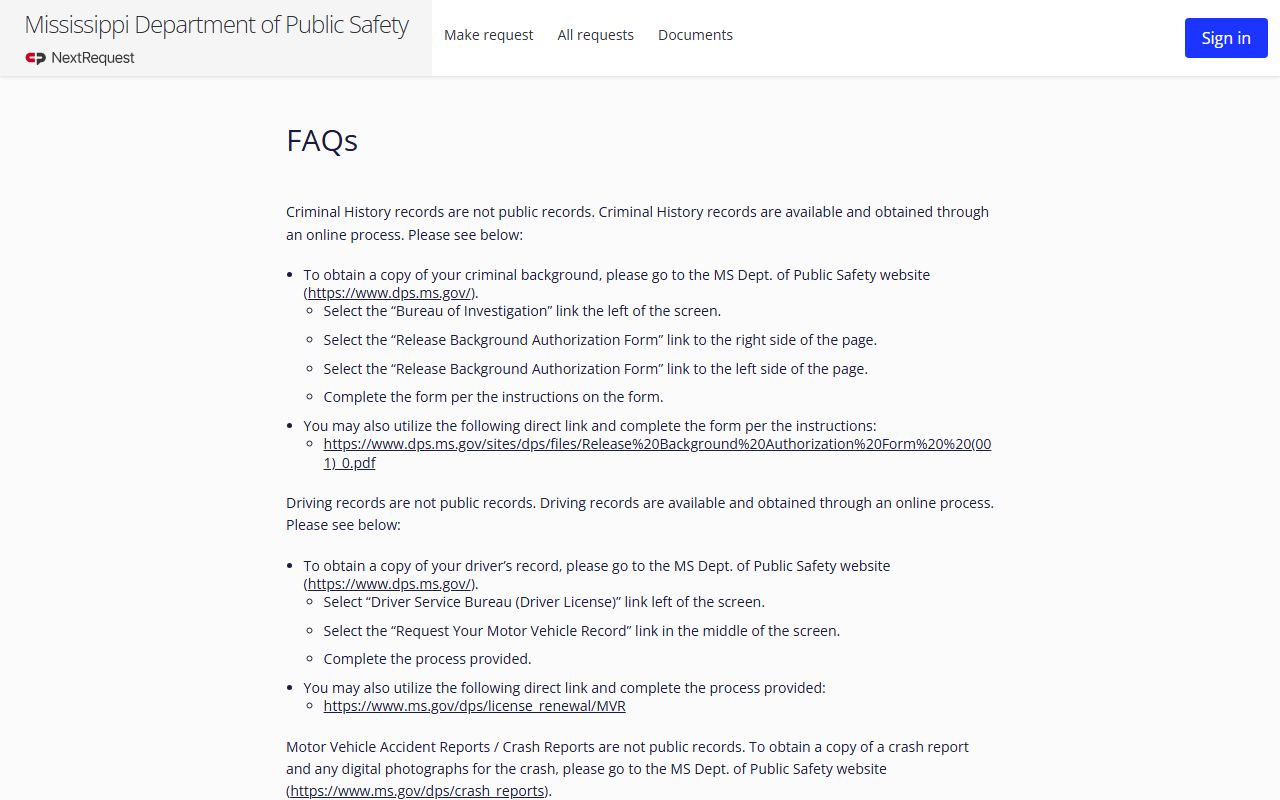 The same request structure, written submission, fee for search and copies, and exemptions for active cases, applies when you ask the Franklin County Sheriff for non-exempt warrant or process information. The state Public Records Act itself is summarized on the Mississippi Ethics Commission page, which sets out the right of access and the duty of each agency to adopt a written request procedure.
Restricted Franklin County Warrant Records
Not every warrant is open to the public even by phone or request. Search warrants are often sealed while an investigation continues. Juvenile warrants and orders are confidential under Mississippi youth-court law. Federal warrants are handled by federal agencies and never appear in county files. Records tied to an active case may be withheld until the matter closes, and a clerk can decline to release sealed material.
It also helps to know what a warrant search is not. A warrant is a pending court order, while the Mississippi sex offender registry is a separate, published safety database with its own search tool. The Department of Public Safety hosts the Mississippi public sex offender registry. 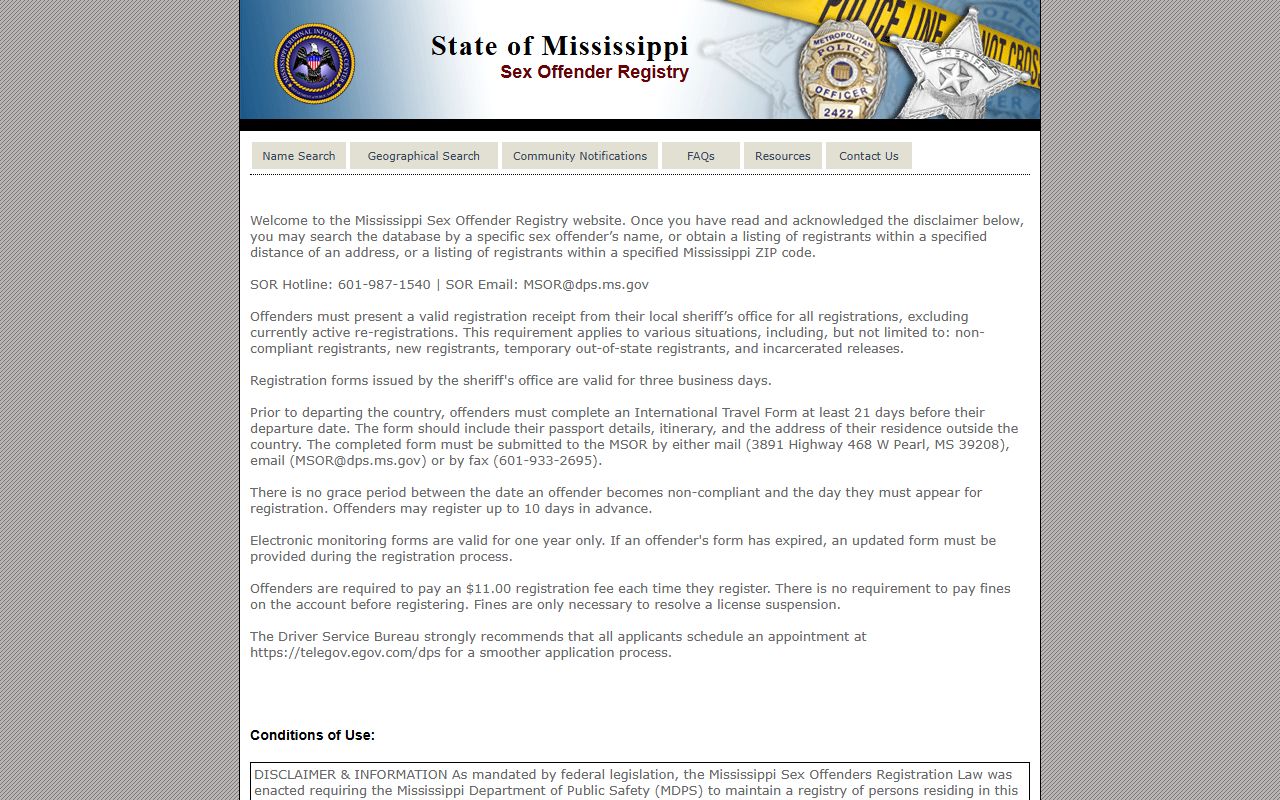 That registry is open to anyone, unlike active warrants, and it answers a different question about a person's record. To learn whether someone is currently held in the county jail, use the Franklin County inmate records route instead, since custody status and an outstanding warrant are tracked separately.
Note: A records office can withhold or redact sealed, juvenile, and active-investigation material even when most of a file would otherwise be public.