
What Probate Covers in Franklin County
Probate is the court process that settles what a person leaves behind and protects people who cannot manage their own affairs. In Franklin County it covers estates of people who died with or without a will, the probate of wills, letters testamentary and letters of administration, notice to creditors, inventories and accountings, and heirship proceedings when the rightful heirs must be determined. It also covers guardianships for minors, conservatorships for incapacitated adults, and settlements paid to minors. These matters touch ordinary families, not just large estates, which is why the county's residents interact with this court more than they might expect.
All of this is handled in Chancery Court, not in a standalone probate court. The county's courts describe Chancery Court as the venue for estates of decedents, land issues, insurance settlements to minors, commitments of mentally disabled persons, and domestic matters. The Chancery Clerk, Jill Gilbert, is the clerk for that court and the custodian for its files. Population context helps explain the steady demand for these filings, and the Census Bureau profiles the county on its Franklin County QuickFacts page. 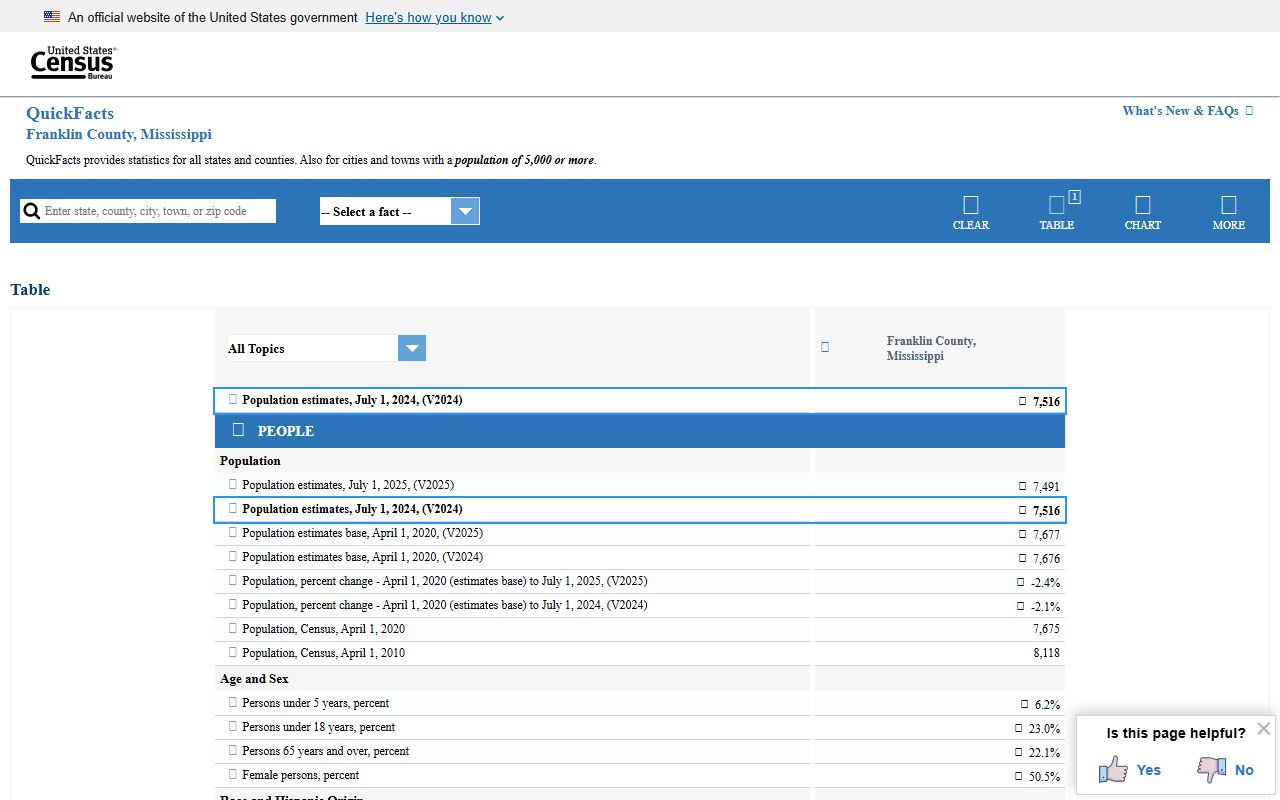 Those figures show a small, mostly rural county, where the Chancery Clerk's office serves as the single hub for estate and equity work.
Because one office carries so many roles, it helps to picture where probate fits. The Chancery Clerk records land transactions, keeps Board of Supervisors minutes, and serves as county auditor and treasurer, yet the same clerk opens estate files and issues the letters that let an executor act. That overlap is normal in Mississippi, where Chancery Court combines equity, land, family, and probate work under one roof. For a family settling a relative's affairs, the takeaway is simple. You will not look for a probate judge in a separate building or a probate clerk down the hall. You will work with Chancery Court and its clerk for the will, the estate, and any guardianship that follows.
Franklin County Probate Terms Defined
Probate paperwork leans on a handful of legal words that decide who does what. The quick guide below explains the terms you are most likely to see in a Franklin County estate or guardianship file. Knowing them makes the file easier to read and the clerk easier to talk to, since each word points to a specific role or stage in the case.
- Testator
- The person who made the will. When that person dies, the will is offered to Chancery Court for probate.
- Executor
- The person named in the will to carry out its terms, gather assets, pay debts, and distribute what remains.
- Intestate
- Dying without a valid will. The estate then passes under Mississippi law to the legal heirs, often through an administrator.
- Guardianship
- A court arrangement that places a responsible adult in charge of a minor or the minor's property.
- Conservatorship
- A court arrangement that gives a conservator authority over the affairs of an adult who cannot manage them.
How to Search Franklin County Chancery Court
There is no Franklin County probate-specific online portal. The statewide electronic system, PAMEC, may cover eligible Chancery Court cases, but it requires a registered account, charges fees, and can restrict remote access to sensitive matters. For most people the dependable route is the Chancery Clerk in person, by phone, or by mail. The steps below outline that path.
- Decide whether your matter is an estate, a guardianship, a conservatorship, a minor settlement, or a related equity issue.
- Contact the Chancery Clerk, who is the clerk for Chancery Court and the custodian for probate and equity files.
- Request the file or ask about filing a petition; provide names, the cause number if you have it, and the approximate year.
What you bring shapes how fast the search goes. The most useful details are the full name of the deceased or the protected person, the approximate year the case was opened, and the cause number if you have it from an earlier paper or a published estate notice. A name alone can still work in a county this size, but a year and a number narrow the file quickly. If you are starting an estate rather than searching one, the clerk can explain which petition fits and what the court will expect after the case opens.
Note: Older estate files and certified copies usually require a direct request to the Chancery Clerk, since PAMEC may not display every probate record.
Probate Venue in Franklin County
Probate is filed with the Chancery Clerk and decided by the Chancery Court District 4 judges. The Chancery Clerk records and keeps the files, while the judges sign orders, grant letters, and rule on contested matters. The county describes the clerk's broad role on its Chancery Clerk page. 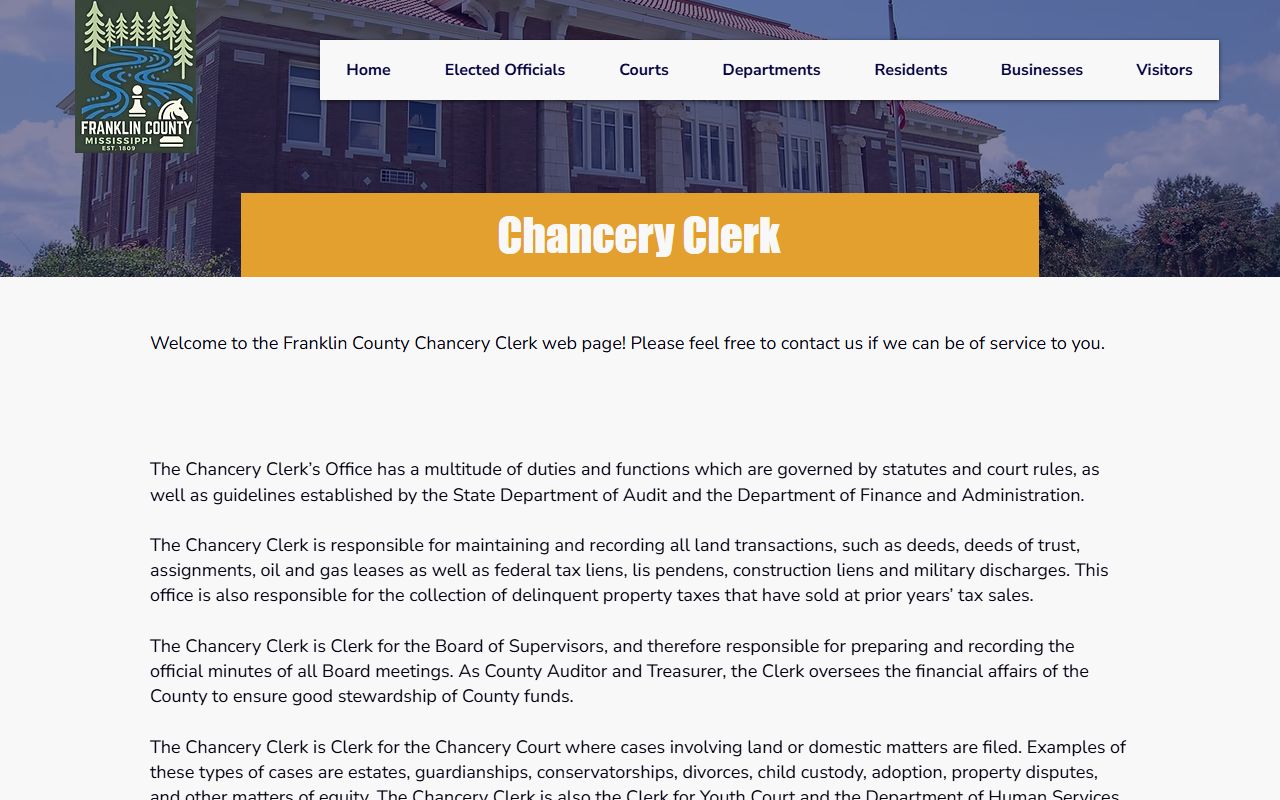 The contact cards below give the office and both judges who serve this district. For most routine estate questions the clerk's office is the first call, and the judges become involved when an order or a contested ruling is needed.
Chancery Clerk
Jill Gilbert, Chancery Clerk
P.O. Box 297
Meadville, MS 39653
601-384-2330
Mon to Fri, 8:00 a.m. to 5:00 p.m.
Chancery Judge, District 4
Judge Debbra K. Halford
P.O. Box 575
Meadville, MS 39653
601-384-3833
Chancery Judge, District 4
Judge Wayne Smith
P.O. Box 524
Liberty, MS 39645
601-657-8588
Franklin County Probate Filing Fees
A Franklin County probate filing fee schedule was not located in official sources, so no amounts are invented here. The table records what the documented research shows, which is that the clerk sets and collects these charges. Call the Chancery Clerk for the current figure before you file or order copies.
| Item | Amount |
|---|---|
| Estate or will petition | Not located in official Franklin County sources; call the Chancery Clerk |
| Letters testamentary or administration | Not located; call the Chancery Clerk |
| Guardianship or conservatorship petition | Not located; call the Chancery Clerk |
| Certified copy | Not located; request the fee from the Chancery Clerk |
What Franklin County Probate Records Show
A probate file tracks an estate from opening to closing. Early documents include the petition and the will, if there is one, followed by the order admitting the will and the letters that empower the executor or administrator. Mississippi estate matters use a cause number and carry the Chancery Clerk's signature, so a file is identified by its caption and that number. As administration moves forward, the record can hold the notice to creditors, an inventory of assets, accountings, petitions to sell or transfer property, and the final order that closes the estate. Guardianship and conservatorship files add the appointment order, bond, and periodic accountings that show how funds were handled.
Heirship cases sit alongside the standard estate file. When someone dies without a will, or when the heirs are unknown or scattered, the court can determine who inherits through a proceeding that names the legal heirs. Those records can be valuable to genealogists and to families sorting out old land, because they tie people to property and to a date of death. Inventories and accountings add another layer, listing what the estate held and how money moved, which is often the detail a beneficiary or creditor most wants to see.
For divorce, custody, adoption, and the land and equity work the same clerk manages, the related Franklin County marriage and divorce records page covers the family side of Chancery Court. The office that keeps all of it is detailed on the Franklin County Chancery Clerk page.
Restricted Probate Records
Not every probate paper is open to the public. Files that involve minors, guardianships, conservatorships, adoptions, or mental health commitments are sensitive and can be sealed or limited by statute or court order. Personal identifiers such as Social Security numbers, financial account numbers, and the names of minor children are meant to stay out of public view. When a record is restricted, PAMEC may show no remote access, and the clerk may require a court order or proof that you are a party or authorized person before releasing it.
If a file you expect to find does not appear, do not assume it never existed. A sealed order, a minor's settlement, or a confidential mental health matter can keep a record off public channels even when the case is real. The same is true for very old estates that were never digitized. In those cases the answer is to ask the Chancery Clerk how the record can be accessed, whether by appointment, written request, or court order. The absence of an online result is not the same as the absence of a record.